What a Nearly Empty Page Leaves Room For
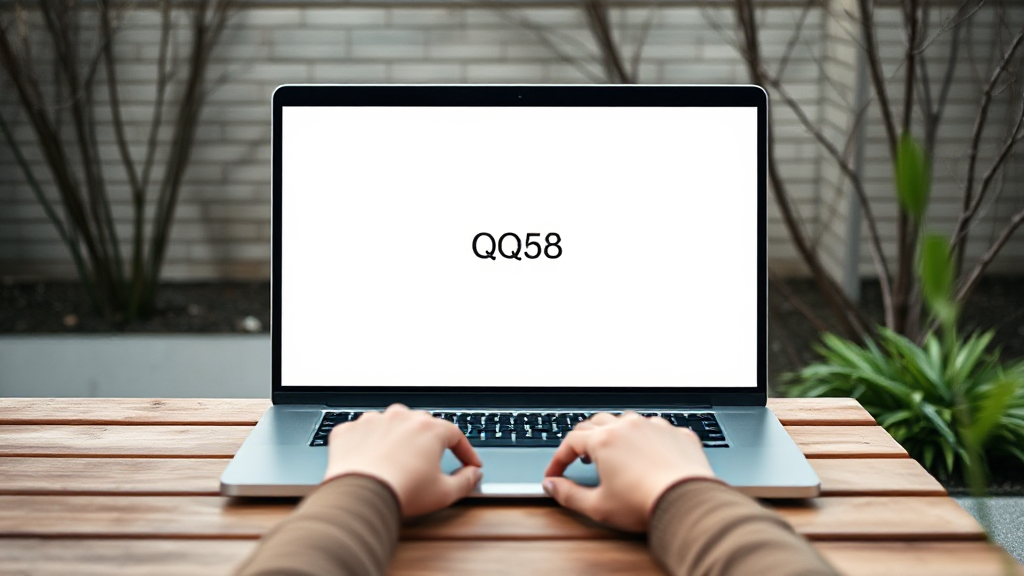
I load the page the way I check a garden in the early morning, before the day has decided what it wants to be. The browser fills with white, then holds it. There is a brand name, bagan7, and almost nothing else. No headline pushing at me. No menu of promises. The emptiness sits there like weather rather than a fault, and I find myself waiting in it instead of clicking away.
Most pages greet a visitor with noise. This one withholds. That withholding is the first thing worth noticing, and it changes what the rest of the visit can be about.
The Stillness of a Page That Says Only Its Name
A sparse page behaves differently from a busy one. Busy pages ask you to choose, compare, and move. A page holding only its name asks you to look. I catch myself reading the letters twice, then letting my eye rest on the white space around them. The white space is not blank so much as quiet, and quiet has its own texture when you stop treating it as an error.
In a garden, the beds between plants do the same work. They hold the shape. They give each stem a place to stand. A page like this one, with almost no visible content beyond a single name, performs a similar function: it frames the name and refuses to crowd it. Whether that refusal is deliberate or simply unfinished, I cannot know from the outside. What I can know is how it feels to stand in front of it.
It feels like being trusted with a small amount of information. There is nothing to verify, nothing to dismiss. The brand name sits there without argument. I notice that I am not scanning for buttons. I am not calculating a price. I am doing something closer to observing a still-life, where the objects are few and the light matters more than the inventory.
Reading Absence as Information
Absence is usually read as failure online. A missing description means neglect; a blank page means a broken link. But absence can also be a kind of restraint, and restraint is rare enough to be worth studying. When a page presents only a name, the visitor is left to supply the context. That is an unusual burden, and it is also an unusual freedom.
I begin to list what is not there, not to complain but to notice. There is no stated service, no audience, no history, no contact path, no example of work. The page does not tell me whether it belongs to a product, a studio, a person, or a placeholder. The brand name is the only fixed point, and everything else is left open. That openness is the page’s actual content, if content is the right word for it.
This is where patience becomes useful. A gardener does not judge a bed in the first week of spring. The soil may look bare while roots are doing their slow work underneath. I try to extend the same courtesy to a page like bagan7, not because I assume hidden depth, but because assuming nothing is more honest than assuming everything. The page has not told me what it is. I can wait without deciding.
Waiting is not passive, though. It is a form of attention. I notice the typography, the placement, the exact amount of margin. I notice that the name is centered or near-centered, that the background is plain, that nothing competes. These small decisions are the only evidence I have, and they suggest a certain minimalism, a preference for the unadorned. Whether that preference extends beyond the page, I cannot say. But the page itself is consistent.
What Minimalism Asks of the Visitor
Minimalism is often praised as elegant, but it is also demanding. A sparse page puts the work of interpretation on the person looking at it. There is no narrative to follow, no call to action to obey. The visitor must decide what to do with the quiet. Some will leave immediately, finding nothing to hold onto. Others will stay a moment longer, curious about the restraint.
I belong to the second group, at least on this visit. The page reminds me of a garden gate with no sign on it. You can walk past, or you can stand at the gate and wonder. The wondering is the point. A page that refuses to explain itself invites a slower kind of reading, one that notices the edges rather than the center.
There is a practical side to this too. Sparse pages load quickly and ask little of a device. They are easy to revisit. They do not demand that you remember a layout or find a hidden menu. In that sense, the emptiness is functional, not just aesthetic. It removes friction by removing everything that could cause friction. The trade-off is that it also removes guidance, and guidance is what most visitors expect.
So the page sits between two readings. It can be seen as incomplete, or as deliberately bare. I find I can hold both readings at once without resolving them. The garden does not resolve itself in a single visit either. It changes with the season, and the visitor changes with it.
A Small Exercise in Not Filling the Silence
Before I close the tab, I try something. I resist the urge to imagine what the site might become. I do not invent a product line or a mission statement. I let the page be exactly what it is: a name on a plain ground, with room around it. The room is the subject. The room is what I came away with.
This is not a recommendation to leave websites empty. It is an observation about what emptiness makes possible. A page with almost nothing on it gives the visitor a rare chance to notice their own expectations. I expected a pitch. I found a pause. The pause was more interesting than the pitch would have been.
I think of the bagan7 page now the way I think of a corner of the garden left unplanted on purpose. It looks like nothing is happening. But the corner catches light differently, and weeds come and go, and the eye rests there between the fuller beds. Not every square foot needs a flower. Not every page needs a paragraph. Sometimes the most useful thing a surface can do is hold still and let the visitor arrive.
When I finally close the tab, I do not feel that I have learned a fact. I feel that I have practiced a kind of attention. That may be the whole offering of a nearly empty page: not information, but a small clearing where information has not yet crowded in. I leave the clearing as I found it, and I am glad it was there.